
.png)



Symposia
LGBTQ+

Kate Dorrell, M.S. (she/her/hers)
Graduate Student
Rosalind Franklin University of Medicine and Science
Chicago, IL, United States

Sabrina Bothwell, M.A.
Graduate Student Researcher
University of Cincinnati
Cincinnati, OH, United States

Emily Devlin, B.A.
Graduate Student
University of Cincinnati
Cincinnati, OH, United States
Michael Newcomb, Ph.D. (he/him/his)
Associate Professor
Northwestern University Feinberg School of Medicine
Chicago, IL, United States
.jpg "Sarah Whitton, PhD photo")
Sarah Whitton, PhD
Professor
University of Cincinnati
Cincinnati, OH, United States
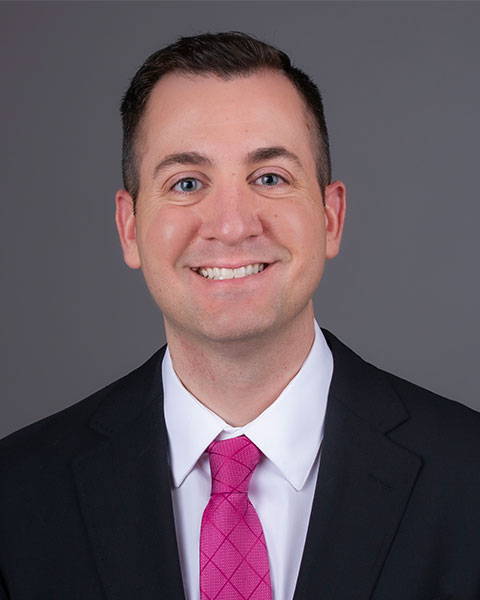
Brian Feinstein, Ph.D. (he/him/his)
Associate Professor
Rosalind Franklin University
N Chicago, IL, United States
Sexual and gender identity continue to evolve over time for many sexual and gender minority (SGM) individuals (Diamond, 2016; Katz-Wise et al., 2023). Although changes in sexual and gender identity are often associated with adverse health outcomes (e.g., depression; Everett et al., 2016), this may depend on motivations underlying why someone changes how they identify (e.g., new self-understanding vs. external pressure). However, little is known about the range of motivations for changes in sexual and gender identity among SGM individuals.
To address this, we used two waves of data (spaced six-months apart) from a longitudinal study of SGM individuals assigned female at birth (SGM-AFAB). Participants who reported changes in sexual identity (n = 73) and/or gender identity (n = 47) between the two waves were asked to describe their reasons, and written responses were thematically analyzed.
We identified seven reasons for sexual identity changes such as shifting desires, wanting to use labels perceived as more inclusive, and new romantic/sexual experiences. We also identified seven reasons for gender identity changes such as understanding oneself better, certain labels simply feeling better, and the belief that gender is fluid or undefinable. Three of the identified reasons applied to changes in both sexual and gender identity: still trying to figure out what fits, using multiple labels interchangeably, and responses to stigma.
The present study highlights the range of motivations for changes in sexual and gender identity among SGM-AFAB individuals. The findings have the potential to inform a better understanding of when and why changes in sexual and gender identity are associated with worse mental health outcomes and to inform efforts to support SGM individuals through identity changes. Future research should examine whether different motivations for changes in sexual and gender identity are associated with different psychosocial outcomes.