
.png)



Mental Health Disparities
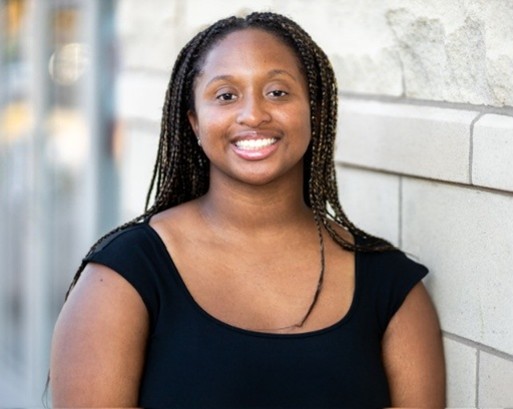
Michelle Okyere, B.S.
Postbaccalaureate Student
University of Texas Health Science Center at San Antonio
San Antonio, Texas, United States
Diamond Hercules, B.S.
Research Assistant
University of Texas Health Science Center at San Antonio
San Antonio, Texas, United States
Salome Wilfred, Ph.D.
Postdoctoral Research Fellow
University of Texas Health Science Center at San Antonio
San Antonio, Texas, United States
Jessica Salinas, B.S.
Research Assistant
University of Texas Health Science Center at San Antonio
San Antonio, Texas, United States
Taylur Loera, B.S.
Student
Texas State University
San Antonio, Texas, United States
Lisa S. Kilpela, Ph.D.
Associate Director of the ReACH Center
University of Texas Health Science Center at San Antonio
San Antonio, Texas, United States
Marginalized communities often report higher levels of medical mistrust due to their experience of neglect and discrimination by the healthcare system. This pattern of vulnerability impacts quality of life, shown by minoritized individuals through the height of the COVID-19 pandemic as they faced lower access to care compared with the majority population. Long COVID is a chronic illness in which an individual infected by the COVID-19 virus experiences a wide range of health issues, such as fatigue, brain fog, and/or hair loss, for at least three months afterwards. It is important to include community voices in research efforts to reduce the knowledge gap between healthcare professionals and marginalized communities. The following study investigates the relationship between community awareness of Long COVID, medical mistrust, and mental health, exploring the moderation of this effect by gender.
Participants were recruited by word-of-mouth and flyers placed in highly frequented community spaces. To ensure accessibility for a majority Hispanic population, focus groups are held at local community centers and conducted in both English and Spanish. Participants were aware that conversations would focus on Long COVID, but knowledge on this condition was not necessary to participate. Prior to each session, participants completed a self-report questionnaire on knowledge and past experiences with Long COVID, as well as measures of depression (PHQ-9), anxiety (GAD-7), general mental health (PROMIS-10), and medical mistrust (GBMMS).
Data collection is ongoing, thus inferential statistics will be included in the final poster. Participants (N = 28) aged 22-82 (M = 58.11, SD = 15.59) primarily identified as Hispanic/Latina (85.7%), female (71.4%), and married or living with a partner (53.6%). Majority of the participant sample (60%) reported low levels of medical mistrust (M = 28.036, SD = 9.367). Similarly, 78% of participants reported average or below mental well-being (M = 45.096, SD = 9.862). Nearly all the sample (89%) reported minimal knowledge on Long COVID resources and 75% reported a general unawareness and lack of concern for this illness in their community. Participants reported mild to moderate depression (M = 4.964, SD = 5.673), and minimal to mild anxiety (M = 3.778, SD = 4.782). Notably, those who reported concern for contracting Long COVID also reported higher levels of anxiety than those who did not, demonstrating a medium effect size (Cohen’s d = 0.45). Final poster will explore updated inferential statistics and moderations by gender and/or age.
Majority of our participant sample reported low levels of medical mistrust alongside low awareness of Long COVID. If Long COVID awareness coincides with medical mistrust, it is possible that individuals with higher awareness of Long COVID will report higher levels of medical mistrust. Furthermore, individuals who believed they had Long COVID reported greater anxiety. These results highlight the need to gauge community awareness of Long COVID and to provide resources to combat the unease surrounding this illness. This is especially important for historically overlooked and underserved populations, to alleviate the mental and physical health disparities that these communities face.