
.png)



Dissemination & Implementation Science

Allison Ruork, Ph.D. (she/her/hers)
Evidence-Based Practice Institute
Shoreline, WA, United States
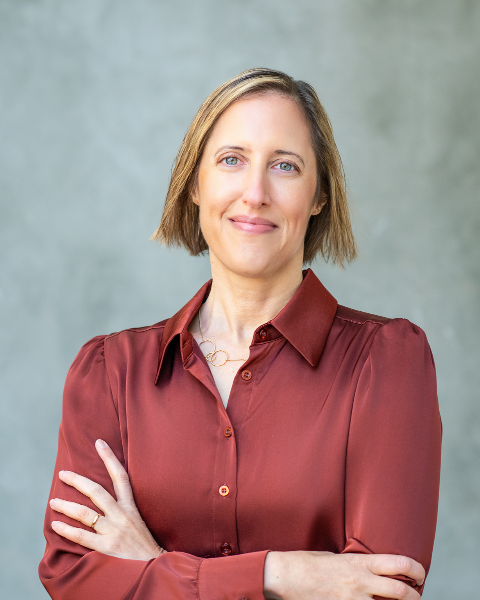
Shireen Rizvi, ABPP, Ph.D.
Director of Psychology Training
Montefiore Medical Center
Bronx, New York, United States
Lynn McFarr, Ph.D.
CBT California
Los Angeles, CA, United States

Melanie Harned, ABPP, Ph.D. (she/her/hers)
VA Puget Sound Health Care System & University of Washington
Seattle, WA, United States
Allison Ruork, Ph.D. (she/her/hers)
Evidence-Based Practice Institute
Shoreline, WA, United States
Janice Kuo, Ph.D. (she/her/hers)
Associate Professor
PAU-Stanford PsyD Consortium, Palo Alto University
Palo Alto, CA, United States
Dialectical Behavior Therapy (DBT) is used for a variety of problems and in a wide variety of settings. Like many other cognitive-behavioral treatments, DBT is effective when delivered in real-world contexts, but also appears to lose some of its potency and outcomes tend to be more variable (Walton & Comtois, 2019). One potential explanation for this drop in consistency and potency is therapist adherence. Adherence is defined broadly as the therapist consistently and correctly implementing the strategies included in the treatment without deviation to treatment-inconsistent strategies (Perepletchikova et al., 2007). DBT is a complex, principle driven intervention, which requires therapists learn many acceptance, change, and dialectical strategies. Moreover, to be adherent the therapist must also understand how and when to apply this large number of strategies. This complexity can make DBT a challenging treatment for therapists to learn to deliver adherently. Evidence suggests that adherence is associated with improvements in client outcomes, including reduced suicide attempts, treatment dropout, fewer subsequent hospitalizations (Harned et al., 2022), as well as lower rates of positive drug screens (Linehan et al., 1999). Unfortunately, data also indicates that adherence in real-world contexts is mixed at best, with some studies suggesting that therapists can deliver treatment adherently (Stiglmayr et al. 2014; Priebe et al., 2012). But stronger evidence suggesting that therapists tend to deliver DBT at slightly to moderately below average rates (Harned et al., 2021a; Harned et al. 2021b; Harned et al. 2024). Similarly, the complexity of DBT makes it difficult to measure adherence in clinical effectiveness trials. Research is needed to understand how training contributes to adherence, best practices for measuring adherence across different settings and populations, maintaining adherence in these settings overtime.
This symposium will present on 4/5 different evaluations of therapist adherence to DBT, along with a discussion of the decisions made to increase the likelihood of therapist adherence, followed by a broader discussion about future directions for studies of therapist adherence in DBT.
First, Dr. Lynn McFarr will present on the LA County Roll Out of DBT, including findings evaluating therapist skill acquisition, competency in DBT, and how measuring competency can assist systems in identifying qualified providers. Next, Dr. Melanie Harned will present results of the evaluation of DBT adherence scores from seven cohorts of therapists (n = 64) in a nationwide year-long DBT Training Program within the Veteran’s Affairs system. Third, Dr. Allison Ruork will present on the training and subsequent adherence data of college counseling center therapists (n =29) participating in a multi-site study of suicide among college students. Finally, Dr. Janice Kuo will discuss client characteristics that impact therapist adherence from a study evaluating DBT in the treatment of suicidal individuals (n = 240). The symposium will then conclude with a discussion led by Dr. Shireen Rizvi, and audience Q&A.
Speaker: Lynn McFarr, Ph.D. – CBT California
Co-author: Kate Comtois, PhD, MPH – University of Washington School of Medicine
Co-author: Alex King, PhD – CBT California
Speaker: Melanie Harned, ABPP, Ph.D. (she/her/hers) – VA Puget Sound Health Care System & University of Washington
Co-author: Ciara Oliver, BS – Central Arkansas Veterans Healthcare System
Co-author: Meredith Sears, PhD – Rocky Mountain MIRECC for Suicide Prevention, Rocky Mountain Regional VAMC
Co-author: Catherine Flores, LCSW – Department of Veterans Affairs
Co-author: Laura Meyers, ABPP, Ph.D. – Orlando VA Healthcare System
Co-author: Trevor Coyle, PhD – Department Of Veterans Affairs
Co-author: April (Dawn) Orr-Sherrill, LCSW – Department Of Veterans Affairs
Co-author: Jeffery Pitcock, MPH – Central Arkansas Veterans Healthcare System
Co-author: Jessica Walker, PhD – Department of Veterans Affairs
Co-author: Sara J. Landes, Ph.D. (she/her/hers) – US Department of Veterans Affairs
Speaker: Allison K. Ruork, Ph.D. (she/her/hers) – Evidence-Based Practice Institute
Co-author: Linda Oshin, Ph.D. – Rutgers University
Co-author: Hannah R. Krall, B.S. – Rutgers University
Co-author: Jacqueline Pistorello, Ph.D. – University of Nevada, Reno Counseling Services
Co-author: John R. Seeley, Ph.D. – University of Oregon
Co-author: Scott N. Compton, Ph.D. – Lurie Children's Hospital of Chicago
Co-author: Shireen Rizvi, ABPP, Ph.D. – Montefiore Medical Center
Speaker: Janice Kuo, Ph.D. (she/her/hers) – PAU-Stanford PsyD Consortium, Palo Alto University
Co-author: Alexander Chapman, PhD – Department of Psychology, Simon Fraser University
Co-author: Shelley McMain, Ph.D. – cAMH