
.png)


Technology/Digital Health

Christina Soma, Ph.D. (she/her/hers)
Post-doctoral Fellow
Lyssn.io
Fort Collins, CO, United States
Shannon Wiltsey Stirman, Ph.D.
Professor
Stanford University
Menlo Park, CA, United States
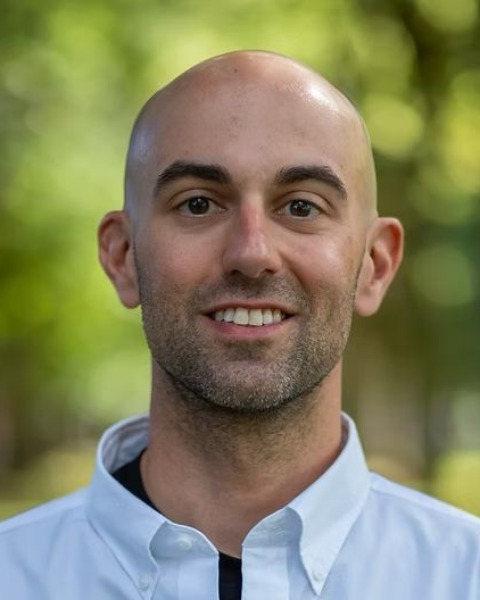
Matteo Bugatti, Ph.D. (he/him/his)
Oregon State University
Corvallis, OR, United States

Torrey Creed, Ph.D. (she/her/hers)
Associate Professor
University of Pennsylvania
Philadelphia, PA, United States
Adam Carmel, Ph.D.
Clinical Professor
University of Washington, Seattle
Seattle, WA, United States
Christina Soma, Ph.D. (she/her/hers)
Post-doctoral Fellow
Lyssn.io
Fort Collins, CO, United States
Artificial intelligence (AI) continues to transform behavioral healthcare and offers new opportunities for enhancing evidence-based practice (EBP). This symposium will explore how researchers, educators, and content experts are collaborating to build AI-based tools to augment training, fidelity monitoring, and supervision of EBPs. Presenters will discuss their process of collaboration, creation, and distillation of whole EBPs to smaller, concrete skills that can be successfully identified by AI classification models and provide learners reliable and consistent feedback. Evidence will be presented regarding the development, validity, and reliability of these tools. Presenters will focus how these AI-based tools can support clinical decision-making, and enhance therapist training across key therapeutic domains, specifically Multicultural Orientation (MCO), Cognitive Behavioral Therapy (CBT), Dialectical Behavior Therapy (DBT), and suicide prevention. The session will also feature demonstrations of these AI-assisted tools that support culturally responsive care, and automated assessment of skill practice.
The first presentation will describe the research conducted on MCO, a treatment emphasizing interpersonal, client-centered, identity-focused, and immediacy skills. The second and third presentations, CBT and DBT respectively, will discuss the importance of skill based practice for complex treatment protocols, and the challenge of choosing and creating didactic content for key foundational skills. The final presentation will discuss prior work conducted to develop models to detect risk assessments, how that work has been extended to training development, and the process of including common factor skills (e.g., active listening and empathy).
This symposium is designed for clinicians, researchers, and educators interested in integrating AI into psychological treatments while ensuring that technology remains a tool for enhancing, rather than replacing, human-centered care. Participants will gain practical skills in understanding the process of creating AI-based training of EBPs, be able to identify four different examples of how classification based AI-models can augment EBP training, and better understand innovative methods to enhance clinical effectiveness while maintaining ethical standards and therapeutic integrity. Participants will learn content that has the possibility to empower them to make choices about when and how to use technology to augment their practice, training, and supervision.
Speaker: Matteo Bugatti, Ph.D. (he/him/his) – Oregon State University
Co-author: Jesse Owen, Ph.D. – University of Denver
Speaker: Torrey Creed, Ph.D. (she/her/hers) – University of Pennsylvania
Co-author: Roisin Slevin, BS – Lyssn.io
Co-author: Amber Calloway, Ph.D. (she/her/hers) – University of Pennsylvania
Co-author: Brian Pace, PhD (he/him/his) – Lyssn.io
Co-author: Jordan Pruett, PhD – Lyssn.io
Co-author: Zac Imel, Ph.D. – Lyssn.io
Co-author: David Atkins, PhD (he/him/his) – Lyssn.io
Speaker: Adam Carmel, Ph.D. – University of Washington, Seattle
Speaker: Christina S. Soma, Ph.D. (she/her/hers) – Lyssn.io
Co-author: Zac Imel, Ph.D. – Lyssn.io
Co-author: Brian Pace, PhD (he/him/his) – Lyssn.io
Co-author: Elizabeth Burr, BA – protoCall Services, Inc.
Co-author: Brad Pendergraft, LCSW – protoCall Services, Inc.
Co-author: Michael Tanana, Ph.D. (he/him/his) – Lyssn.io, Inc.
Co-author: David Atkins, PhD (he/him/his) – Lyssn.io