
.png)



Adult- Health Psychology / Behavioral Medicine
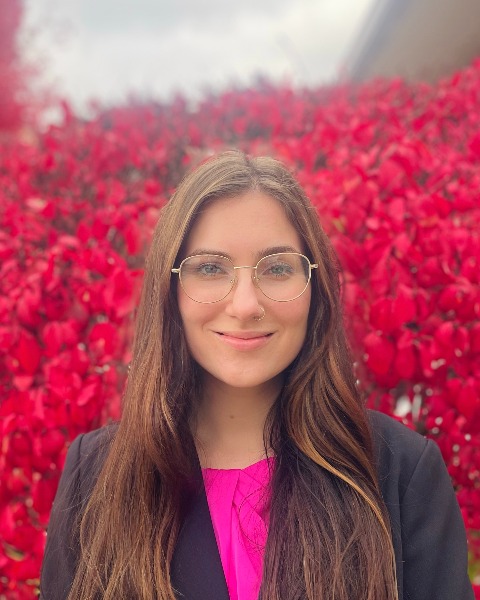
Miranda Schaffer, M.S. (she/her/hers)
Doctoral Student
Eastern Michigan University
ANN ARBOR, MI, United States
Najda Robinson-Mayer, MSW (she/her/hers)
Licensed Clinical Social Worker
Department of Neurology and Department of Social Work, University of Michigan, Ann Arbor
Ann Arbor, MI, United States
Elissa Patterson, Ph.D. (she/her/hers)
Clinical Assistant Professor
Department of Psychiatry, Neurology, University of Michigan, Ann Arbor
Ann Arbor, MI, United States
Nicholas Beimer, M.D.
Clinical Associate Professor
Department of Neurology, University of Michigan, Ann Arbor
Ann Arbor, MI, United States
Joseph Tu, M.S. (he/him/his)
Eastern Colorado Healthcare System
Aurora, CO, United States
Wesley Kerr, M.D., Ph.D.
Assistant Professor of Neurology and Bioinformatics
Department of Neurology, University of Pittsburgh
Ann Arbor, MI, United States
Individuals with functional seizures find themselves at the intersection of neurology and psychology—with clinicians of all disciplines often feeling unequipped to understand and treat this complex, prevalent, and debilitating disorder (Asadi-Pooya, 2023; McKenzie et al., 2016). In addition to seizures, individuals with this disorder often experience high levels of depression (Sakurai & Kanemoto, 2022), poor physical health (Popkirov et al., 2020), impaired occupational functioning (McKenzie et al., 2016), and shortened life expectancy—by up to a decade (Asadi-Pooya, 2023). Misunderstandings and mental health stigma in medical care have been linked with patients often feeling blamed and shamed when seeking treatment, which can include providers using names that are offensive to many with the condition like “pseudo seizures” and “psychogenic non-epileptic seizures” (Robson & Lian, 2017). Given these significant challenges, there is a critical need to improve access to effective interventions. Referral to appropriate treatment has the potential to reduce the distress of functional seizures and substantially decrease the need for emergency and inpatient healthcare services (Bean et al., 2023). Neurobehavioral approaches that incorporate cognitive-behavioral strategies stand out as the most empirically supported treatment for functional seizures, and many psychotherapists already possess the necessary skills to care for these patients (Lopez & LaFrance, 2022). Neurobehavioral therapy has been found to improve overall quality of life, distress from seizures, and global functioning (Goldstein et al., 2010, 2020). However, only 16% of patients with functional seizures achieve seizure freedom at 12-month follow-up (Goldstein et al., 2020). Given the profound gap in understanding and effective, patient-centered treatment for functional seizures, there is a critical need to advance research and implement empirically supported, compassionate, and person-centered approaches to improve outcomes for this underserved population. The current symposium will illustrate why effective treatment is necessary to save lives— in a large university hospital sample (N = 30, 486), mortality in functional seizures was comparable to epilepsy, and thus, a whole patient approach is required. This symposium will also provide insight into multi-morbidities and neurobehavioral therapy outcomes in a real-world multidisciplinary clinic with over 700 patients. These presentations will highlight how person-centered statistical methods illuminate the reality of physical/mental health heterogeneity in functional seizure patients (n = 588), and speak to real-world treatment effectiveness, as well as challenges, like treatment adherence (n = 179). Finally, our discussant will reflect on these findings from a clinician’s perspective, highlighting key takeaways, actionable strategies, and steps the field can take to affirm the diverse experiences of individuals with functional seizures. Together, this set of presentations from diverse, multidisciplinary speakers aims to shed light on an often-misunderstood condition to connect science and care for those living with functional seizures.
Speaker: Nicholas J. Beimer, M.D. – Department of Neurology, University of Michigan, Ann Arbor
Co-author: Najda Robinson-Mayer, MSW (she/her/hers) – Department of Neurology and Department of Social Work, University of Michigan, Ann Arbor
Co-author: Elissa Patterson, Ph.D. (she/her/hers) – Department of Psychiatry, Neurology, University of Michigan, Ann Arbor
Co-author: Gerald Scott Winder, MD – Henry Ford Health
Co-author: Wesley Kerr, M.D., Ph.D. – Department of Neurology, University of Pittsburgh
Speaker: Joseph Tu, M.S. (he/him/his) – Eastern Colorado Healthcare System
Speaker: Wesley Kerr, M.D., Ph.D. – Department of Neurology, University of Pittsburgh
Co-author: Katherine McFarlane, MS – University of Pittsburgh School of Medicine
Co-author: Alex Israel, MD – University of Pittsburgh School of Medicine
Co-author: Danielle Carns, PsyD – University of Pittsburgh School of Medicine
Co-author: Lianne Vighetti, MSW – University of Pittsburgh School of Medicine
Co-author: Stephen Koscumbs, BS – University of Pittsburgh School of Medicine
Co-author: Zongqi Xia, MD, PhD – University of Pittsburgh School of Medicine