
.png)



Translational

M. Alexandra Kredlow, Ph.D. (she/her/hers)
Dean of Arts and Sciences Assistant Professor
Tufts University
Medford, Massachusetts, United States
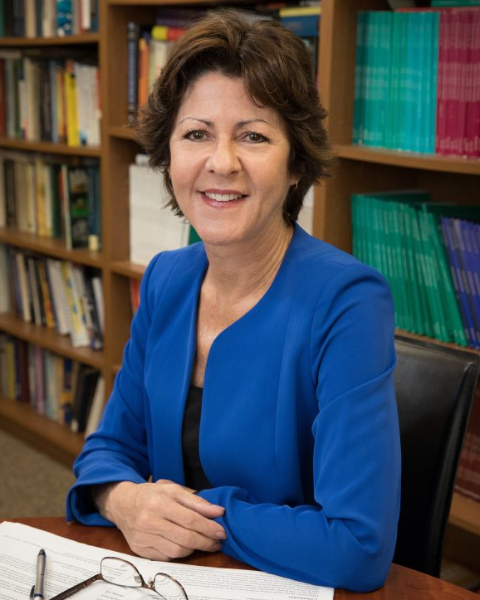
Michelle Craske, Ph.D.
Professor of Psychology, Psychiatry and Biobehavioral Sciences
University of California Los Angeles
Los Angeles, CA, United States
Candace Raio, Ph.D. (she/her/hers)
NYU Grossman School of Medicine
New York, NY, United States
Seth Norrholm, Ph.D. (he/him/his)
Associate Professor
Wayne State University School of Medicine
Detroit, MI, United States
.jpg "Ryan Jacoby, Ph.D. (she/her/hers) photo")
Ryan Jacoby, Ph.D. (she/her/hers)
Clinical Psychologist
Massachusetts General Hospital
Boston, MA, United States
Xiaoqian Xiao, Ph.D.
Postdoc
University of Washington, Seattle
Redmond, WA, United States
M. Alexandra Kredlow, Ph.D. (she/her/hers)
Dean of Arts and Sciences Assistant Professor
Tufts University
Medford, Massachusetts, United States
Fear conditioning is a paradigmatic tool, included in the NIH Research Domain Criteria matrix, that is used to advance transdiagnostic understanding of fear-related disorders, such as anxiety, OCD, and PTSD. The extinction phase of fear conditioning has long been considered an analog for exposure (Beckers et al., 2023; Benito et al., 2024). This has led to an abundance of research on strategies to enhance extinction in the laboratory with the goal of translating this work to the clinic to enhance exposure therapy (Craske et al., 2022). Researchers have also used the fear conditioning model to understand clinically relevant predictors of extinction learning and return of fear. Yet, the number of fear extinction studies conducted in non-clinical populations still far exceeds the number conducted in clinical samples (Duits et al., 2015), limiting clinical conclusions that can be drawn. Certain populations (e.g., GAD, OCD, military sexual trauma-related PTSD) are particularly understudied and despite the fact that fear-related disorders are more prevalent in females, fear extinction is still most often studied in males (Velasco et al., 2019). The goal of this symposium is to highlight advances in fear extinction research with a focus on studies aimed at promoting translation to or conducted in populations with fear-related disorders. We especially highlight studies in diverse and understudied subgroups.
We will begin with two studies that characterize and examine predictors of extinction in under-studied populations. First, Dr. Raio will present on fear extinction and return of fear in a population with GAD. Then, Dr. Norrholm will present on fear extinction and extinction recall in female veterans who have experienced military sexual trauma with and without PTSD. Next, we will hear from Dr. Jacoby who is using extinction learning as a tool to examine mechanisms of change. She will present on exposure and response prevention-related changes in fMRI activation during the different phases of fear extinction learning in OCD, with the ultimate goal being to identify a potential neural treatment target for combination therapies (e.g., ERP plus transcranial magnetic stimulation). Subsequently, we will hear about extinction enhancement research as a tool for identifying potential strategies to enhance exposure therapy. Dr. Fang will present the results of a study using oxytocin to enhance vicarious extinction in social anxiety disorder, specifically examining sex differences in fMRI activation during vicarious extinction, with and without oxytocin. Finally, Dr. Kredlow will present data on the reliability and validity of the Human Extinction Workgroup protocol which was designed for extinction enhancement research with the goal of reducing barriers to entry, promoting rigorous and reproducible research, and facilitating collaborative well-powered studies of extinction in clinical populations. Finally, our discussant Dr. Craske, an expert on harnessing extinction learning research to maximize the efficacy of exposure therapy, will discuss implications of this work. These talks represent rigorous translational science/neuroscience and have implications for improving exposure therapy across multiple diagnoses and diverse groups.
Speaker: Candace M. Raio, Ph.D. (she/her/hers) – NYU Grossman School of Medicine
Co-author: Jiyan Mao, MA – NYU Grossman School of Medicine
Co-author: Sophia Vranos, BA – NYU Grossman School of Medicine
Co-author: Matthew Irwin, B.S. – NYU School of Medicine
Co-author: Leo Almada-Makebish, B.A. – NYU Langone Health
Co-author: Andrea Badillo Perez, B.S., B.A. – NYU Grossman School of Medicine
Co-author: Mary Schadegg, PhD – NYU Grossman School of Medicine
Co-author: Kristin L. Szuhany, Ph.D. (she/her/hers) – NYU School of Medicine
Co-author: Naomi M. Simon, M.D. – NYU Grossman School of Medicine
Speaker: Seth D. Norrholm, Ph.D. (he/him/his) – Wayne State University School of Medicine
Co-author: Michelle Szewczuk, BS (she/her/hers) – Wayne State School of Medicine
Co-author: Jenna Laymon, MA (they/them/theirs) – Wayne State School of Medicine
Co-author: John Noetzel, BS (he/him/his) – Wayne State School of Medicine
Co-author: Leah Weingast, MA, LMSW (she/her/hers) – Atlanta Center for Wellness
Co-author: Ron Acierno, Ph.D., Other – University of Texas Health Science Center at Houston
Co-author: Lori Davis, MD (she/her/hers) – Birmingham VA Health Care System
Speaker: Ryan J. Jacoby, Ph.D. (she/her/hers) – Massachusetts General Hospital
Co-author: Jennifer Greenberg, PsyD – Massachusetts General Hospital / Harvard Medical School
Co-author: Aura Maria Hurtado-Puerto, MD – The Neuromodulation Initiative
Co-author: Kristen Ellard, PhD – Massachusetts General Hospital
Co-author: Edward Pace-Schott, PhD – Massachusetts General Hospital
Co-author: Katelyn Oliver, BS – Emory University
Co-author: Mohammed Milad, Ph.D. – The University of Texas Health Science Center at Houston, McGovern Medical School
Co-author: Sabine Wilhelm, Ph.D. (she/her/hers) – Massachusetts General Hospital
Co-author: Joan Camprodon, MD, PhD – Massachusetts General Hospital
Speaker: Xiaoqian Xiao, Ph.D. – University of Washington, Seattle
Co-author: Xiaoqian Xiao, Ph.D. – University of Washington, Seattle
Co-author: Gillian Grennan, B.S. (she/her/hers) – University of Washington, Seattle
Co-author: Angela Fang, Ph.D. – University of Washington, Seattle
Speaker: M. Alexandra Kredlow, Ph.D. (she/her/hers) – Tufts University
Co-author: Meghan Whalen, B.S. (she/her/hers) – Tufts University
Co-author: Patrick AF Laing, Ph.D. – The University of Texas at Austin
Co-author: Samuel Cooper, Ph.D. (he/him/his) – University of Texas at Austin
Co-author: Lingwei Ouyang, M.A. – University of Texas at Austin
Co-author: Bram Vervliet, PhD – ku leuven
Co-author: Joseph Dunsmoor, Ph.D. – University of Texas at Austin