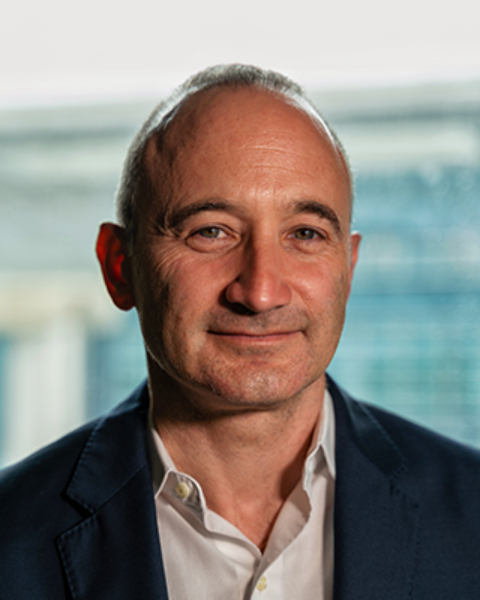
Presidential Address - Presidential Address: Defending Behavioral Science While Embracing Diversity in a Politicized Time: Examples from HIV and Behavioral Health
Saturday, November 22, 2025
6:15 PM - 7:30 PM CST
Location: Celestin D&E, Level 3
Earn 1 Credit
Keywords: HIV / AIDS, LGBTQ+, Public Health Level of Familiarity: All Recommended Readings: Mayer, K. H. (2025). The lavender purge. Journal of the International AIDS Society, 28, e260509. https://doi.org/10.1002/jia2.26509, Safren, S. A., O’Cleirigh, C., Andersen, L. S., Magidson, J. F., Lee, J. S., Bainter, S. A., Musinguzi, N., Simoni, J., Kagee, A., & Joska, J. A. (2021). Treating depression and improving adherence in HIV care with task-shifted cognitive-behavioral therapy in Khayelitsha, South Africa: A randomized controlled trial. Journal of the International AIDS Society, 24, e25823. https://doi.org/10.1002/jia2.25823, Pachankis, J. E., Harkness, A., Maciejewski, K. R., Behari, K., Clark, K. A., McConocha, E., Winston, R., Adeyinka, O., Reynolds, J., Bränström, R., Esserman, D. A., Hatzenbuehler, M. L., & Safren, S. A. (2021). LGBQ-affirmative cognitive-behavioral therapy for young gay and bisexual men’s mental and sexual health: A three-arm randomized controlled trial. Journal of Consulting and Clinical Psychology, 90(6), 459–477. https://doi.org/10.1037/ccp0000724, Safren, S. A., Thomas, B., Biello, K. B., Mayer, K. H., Rawat, S., Dange, A., Bedoya, C. A., Menon, S., Anand, V., Balu, V., & O’Cleirigh, C. (2021). Strengthening resilience to reduce HIV risk in Indian MSM: A multicity, randomized, clinical efficacy trial. The Lancet Global Health, 9(4), e446–e455. https://doi.org/10.1016/S2214-109X(20)30547-7, Safren, S. A., Bedoya, C. A., O'Cleirigh, C., Biello, K. B., Pinkston, M. M., Stein, M. D., Traeger, L., Kojic, E., Robbins, G. K., Lerner, J. A., Herman, D. S., Mimiaga, M. J., & Mayer, K. H. (2016). Treating depression and adherence (CBT-AD) in patients with HIV in care: A three-arm randomized controlled trial. The Lancet HIV, 3(11), 529–538. https://www.ncbi.nlm.nih.gov/pmc/articles/PMC5321546/
Professor Trinity University San Antonio, TX, United States
We are at a unique inflection point in the United States, with core values at the foundation of ABCT’s mission under increasing attack. Two specific foundational core values central to ABCT’s mission are “science” and “diversity”. These two core values also have been key guiding principles during my Presidential term, and of the conference theme which has the focus on promoting rigorous science and inclusive affirming therapies. These values are also foundational and critical to domestic and global public health more generally, and the attack on science and on diversity seriously thwarts any progress towards health equity; with the worst consequences being to the most vulnerable populations.
One area particularly affected by changes in national funding practices and new regulations is HIV prevention and treatment. In the U.S., HIV differentially affects sexual, gender, ethnic, and racial minority populations. Globally, HIV differentially affects marginalized populations. This talk will draw on over two decades of global and domestic work in HIV prevention and treatment, to illustrate just how vital behavioral research is to improving public health and to reducing human suffering. It will begin with an overview of recent changes to funding and the resulting ramifications to public health. Starting with the example of work to optimize adherence to life-saving antiretroviral medications for people living with HIV, through trials and studies focused on behavioral health and health behavior change, including examples where behavioral science has driven meaningful outcomes especially for marginalized and diverse populations. Through these examples from my work and that of others, this talk will also explore how science can and must remain rigorous while still affirming identity and lived experience, the importance of community engagement and equity in ultimately developing and implementing evidence based mental health treatments, and why continued investment in mental health, behavioral science, and diversity continues to be critical.
Outline: o Discuss recent initiatives that place behavioral science and diversity in a negative lens and resulting in oppressive public health consequences. o Review selected studies that highlight the role of behavioral science in protecting health in the context of HIV, o Highlight specific CBT trials that emphasize both diversity (inclusive of sexual and gender minority level diversity) and rigorous science; including studies designed to address behavioral health as a means to increase benefit from health behavior change interventions. o Discuss the need for using and protecting objective science in the context of advocacy efforts and policy.
Long-term Goals: • Be able to articulate the importance of behavioral science in public health in general and HIV in particular. • Be able to understand that to change health behavior in people living with a behavioral health problem, one needs to address both the behavioral health problem as well as intervene on the health behavior.
Learning Objectives:
At the end of this session, the learner will be able to:
Articulate the importance of science and diversity through specific example CBT oriented studies related to HIV prevention and care.
Describe, in the context of HIV prevention and care, the rationale and science behind improving behavioral health as a means to increase the potential benefit from interventions to address health behavior change
Explain the need for evidence-based treatments for sexual and gender minority individuals, and the outcomes of selected existing trials.

.png)