Lifetime Achievement - ABCT Lifetime Achievement Award Talk: Reflections About the Future: Cautionary Tales and Food for Thought
Friday, November 21, 2025
10:15 AM - 11:15 AM CST
Location: Celestin D&E, Level 3
Earn 1 Credit
Keywords: Clinical decision making, evidence-based practice, Level of Familiarity: All levels of familiarity with the material Recommended Readings: Emmelkamp, P. M. G. (2025). Failures in cognitive behavior therapy: The state of the art. Current Opinion in Psychology. https:doi.org/10.1016/j.copsyc.2025.102122. , Nezu, A. M. (2020). When psychotherapy is not working: Ethical considerations. Cognitive and Behavioral Practice, 27(4), 417-425. https://doi.org/10.1016/j.cbpra.2020.05.006, Nezu, A. M. (2025). My approach to psychotherapy. Journal of Contemporary Psychotherapy, 1-6. Published online May 20, 2025. https://doi.org/10.1007/s10879-025-09678-6. , ,
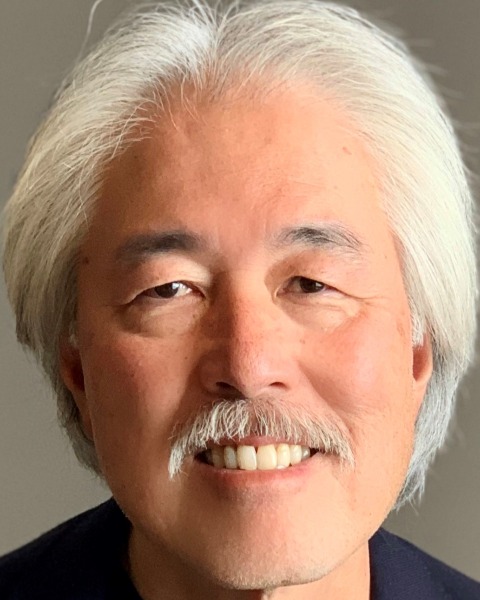
Distinguished University Professor of Psychology Drexel University Long Beach Township, New Jersey, United States
I believe that a significant reason I received this exceptional honor involves my work as a major co-developer and researcher of Problem-Solving Therapy (recently revised as Emotion-Centered PST). However, rather than discuss its evolution and my recent work regarding its relevance for suicide prevention and treatment, I decided to focus on a more meta topic-- the future of behavioral and cognitive therapies (BCT) based on my 45+ years as a BCT-oriented clinician and researcher. While simultaneously acknowledging (and heralding) all the progress and positive aspects of BCT, I often contemplate about the following critical questions: (a) is there too much research being conducted (e.g., too many journals, too many retractions, proliferation of predatory journals, concerns about quality versus quantity)? (b) is there not enough research (i.e., important studies that focus on improving our understanding of the limitations and failures of BCT, why people drop out of BCT treatment, why people refuse to engage in BCT, the long-term effects of BCT, the generalizability of BCT, the importance of therapist competence/expertise regarding both case formulation and treatment implementation)? (c) is BCT too focused on individual “deficiencies? (e.g., does it tend to ignore social determinants of behavior, are we forgetting the “whole” person)? (d) are current measures of efficacy sufficient (i.e., what about measuring adverse/negative effects)? (e) is affect always only a dependent variable (should an “A” be included in BAC—the problem of construct validity)? (f) should there be more social justice targets for CBT interventions to foster (e.g., how to increase behaviors that combat climate change, prevent domestic violence, decrease political violence)? and (g) what is the role of ethics? From a problem-solving therapy perspective, I believe that when we avoid identifying potential difficulties, we also avoid making needed changes. I pose these questions to hopefully engender “food for thought.”
Outline: • Rationale for content of talk—looking to the future to discuss “food for thought” • Limitations of BCT • Importance of social determinants of behavior • Need to identify adverse/negative effects • Is affect only a dependent variable? • Identify “social justice” targets for change • Role of ethics
Learning Objectives:
At the end of this session, the learner will be able to:
Describe at least one current limitation of BCT
Explain why assessing all negative effects of BCT is important
Explain why critical thinking training is important

.png)