
.png)


Symposia
Technology/Digital Health
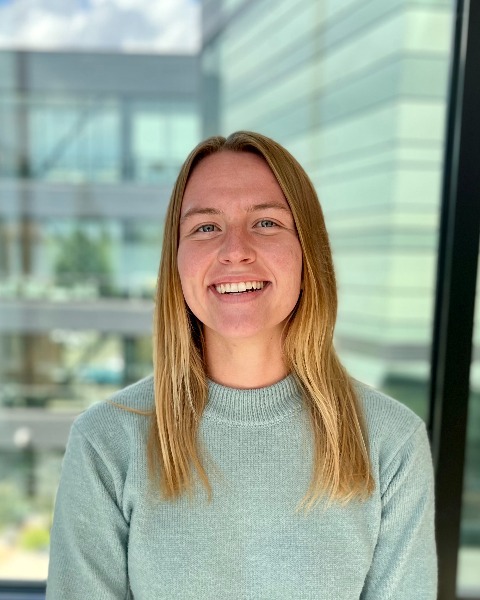
Emily M. Bowers, M.S. (she/her/hers)
Ph.D Student
Utah State University
Logan, UT, United States
Emily M. Bowers, M.S. (she/her/hers)
Ph.D Student
Utah State University
Logan, UT, United States

Leila Capel, M.S. (she/her/hers)
Pre-doctoral Psychology Intern
Dartmouth Hitchcock Medical Center
Logan, UT, United States
Mercedes Woolley, M.S.
Graduate Student
Utah State University
Logan, UT, United States
Michael P. Twohig, Ph.D. (he/him/his)
Professor
Utah State University
Logan, UT, United States

Michael E. Levin, Ph.D.
Professor
Utah State University
Salt Lake City, UT, United States
Objective: Skin picking disorder is a chronic and impairing condition with limited treatment options. Acceptance-enhanced behavior therapy (A-EBT) has shown promise in reducing skin picking symptoms, yet no prior research has examined for whom this intervention is most effective and how it exerts its effects. This study examined moderators of treatment efficacy and whether changes in psychological inflexibility mediated symptom improvement in a randomized controlled trial of a digital intervention for adult with skin picking disorder.
Method: Participants (N = 84) meeting DSM-5 criteria for skin picking disorder were randomized to an online 8-week A-EBT intervention or waitlist control condition. Symptoms were assessed at baseline, mid-intervention (4 weeks), post-intervention (8 weeks), and follow-up (12 weeks). Multilevel modeling (MLM) was used to test moderation effects of baseline psychological inflexibility, age, anxiety, depression, stress, and skin picking type (focused or automatic) on treatment response. Structural equation modeling was conducted to test whether reductions in psychological inflexibility mediated changes in skin picking severity.
Results: Participants in the A-EBT condition showed significantly greater reductions in skin picking severity over time compared to the waitlist group (β = -0.35, p < .001). No baseline psychological characteristics significantly moderated symptom improvement. However, in exploratory analyses, higher levels of automatic skin picking behavior at baseline predicted greater reductions in time spent picking during treatment (β = -1.25, p = .001). Mediation analyses indicated that reductions in psychological inflexibility partially mediated the relationship between treatment condition and symptom improvement (β = 1.04, p = .036).
Conclusions: Findings support A-EBT as an effective intervention for SPD, with psychological flexibility as a key process of change. The lack of significant moderators suggests that A-EBT may be broadly effective across clinical presentations, though automatic skin picking behaviors may influence engagement with treatment. Future research should explore additional mechanisms of change and refine interventions for individuals with distinct SPD subtypes.