
.png)


Autism Spectrum and Developmental Disorders
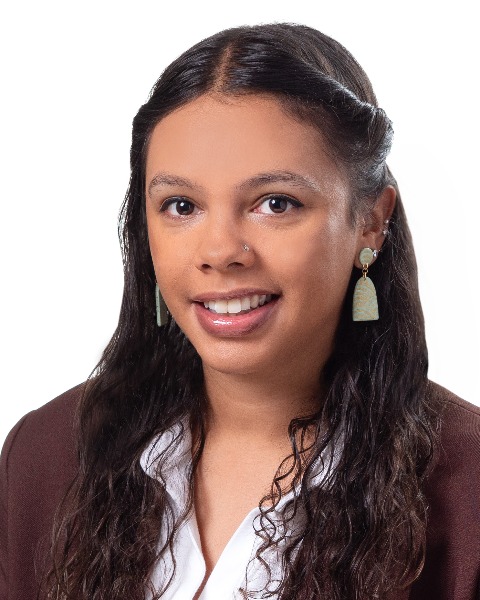
Diondra Straiton, Ph.D. (she/her/hers)
University of Pennsylvania School of Medicine
Philadelphia, PA, United States
Sarabeth Broder-Fingert, M.P.H., M.D. (she/her/hers)
Professor
UMASS Chan Medical School
Worcester, MA, United States
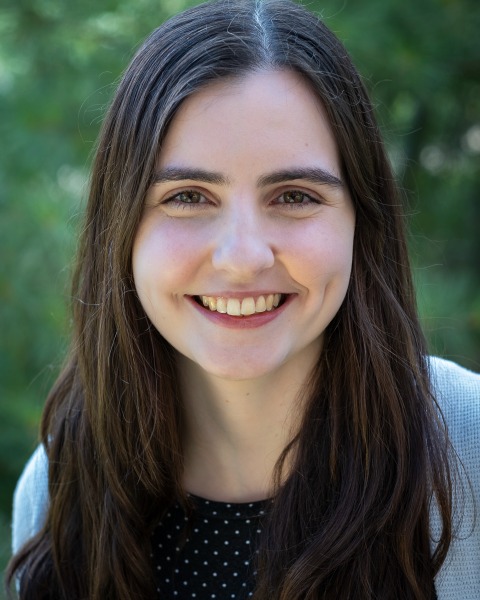
Jessica Tschida, M.A. (she/her/hers)
Graduate Student
Michigan State University, Children's Hospital of Philadelphia
East Lansing, MI, United States
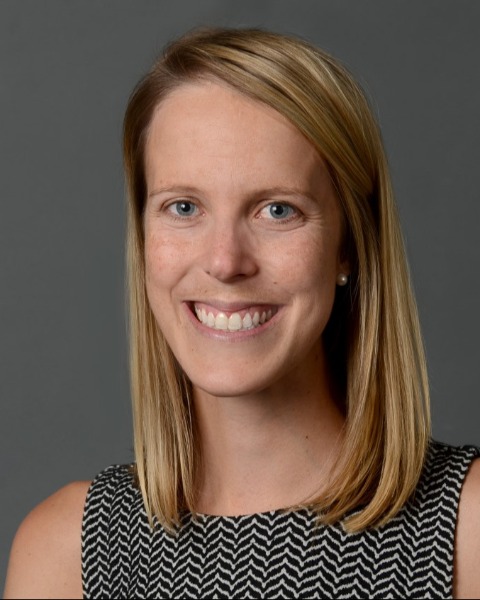
Katherine Pickard, Ph.D. (she/her/hers)
Assistant Professor
Emory University School of Medicine
Atlanta, GA, United States
Anamiguel Pomales Ramos, MA (she/her/hers)
Doctoral Candidate
Michigan State University
East Lansing, MI, United States
Hannah Tokish, M.A. (she/her/hers)
Doctoral Student
Michigan State University
East Lansing, MI, United States
Diondra Straiton, Ph.D. (she/her/hers)
University of Pennsylvania School of Medicine
Philadelphia, PA, United States
Evidence-based behavioral autism interventions developed in university laboratories for autistic children are rarely implemented by community providers with minoritized families (Stahmer et al., 2019), and training efforts to support community providers to use these interventions often fail to support providers to achieve fidelity benchmarks (e.g., Mandell et al., 2013; Pellecchia et al., 2023). There are well-documented service quality disparities for families of autistic children from minoritized racial/ethnic backgrounds and lower-income backgrounds (see Smith et al., 2020 for a review). However, there is a dearth of research on how to improve community-based behavioral interventions for this population.
This symposium leverages community-engaged research with partners across several community settings (e.g., Part C early intervention, specialty anxiety clinics, community mental health) to identify useful adaptations to – and improved training processes for – CBT and caregiver-mediated naturalistic developmental behavioral interventions (NDBIs) for minoritized autistic children. We present a series of qualitative, quantitative, and mixed methods projects that compile evidence-based approaches from implementation science, intervention and adaptation science, and community-partnered participatory research. Our aim is to promote high-quality implementation of inclusive and effective behavioral therapies for minoritized autistic children and their families.
The first presentation presents results from a community-engaged process to adapt a CBT intervention for anxiety in autistic youth (BIACA) using a Community Advisory Board comprised of autistic adults, caregivers, community providers, and agency leaders. The second presentation uses mixed methods data to characterize community-driven adaptations to a caregiver-mediated NDBI called Project ImPACT delivered in an early intervention system (e.g., augmenting sessions with additional content). The third presentation uses mixed methods data to examine whether self-reported cultural humility, training, and demographic factors predicted adaptation frequency in sessions of a caregiver-mediated NDBI (Project ImPACT), highlighting clinician-requested resources to improve cultural humility. The fourth presentation explores whether minoritized families experience a digital divide in use of telehealth for early intervention services for autism, comparing caregiver engagement and caregiver coaching competency within telehealth and in-person sessions of a caregiver-mediated NDBI (Reciprocal Imitation Training). Finally, the fifth presentation illustrates a tailored implementation toolkit to support caregiver coaching with minoritized families, exploring the effects of consultation dosage and format (e.g., group, individual) on caregiver coaching competency in a hybrid implementation-effectiveness trial of Project ImPACT in an urban early intervention system. Taken together, these talks illustrate a careful, community-partnered approach to providing excellent clinical care to a population of autistic children who are multiply marginalized by ableism, racism, classism, and other oppressive systems.
Speaker: Jessica Tschida, M.A. (she/her/hers) – Michigan State University, Children's Hospital of Philadelphia
Co-author: Jyothika Kalatturu (she/her/hers) – Michigan State University
Co-author: Aria Kingstrom (she/her/hers) – Michigan State University
Co-author: Izza Peeran, B.A. (she/her/hers) – Henry Ford Health
Co-author: Amy Drahota, Ph.D. (she/her/hers) – Michigan State University
Speaker: Katherine Pickard, Ph.D. (she/her/hers) – Emory University School of Medicine
Co-author: Lawrence Scahill, PhD – Emory University School of Medicine
Co-author: Aubyn Stahmer, Ph.D. (she/her/hers) – University of California, Davis
Speaker: Anamiguel Pomales Ramos, MA (she/her/hers) – Michigan State University
Co-author: Isabella Barbore, BA (she/her/hers) – Michigan State University
Co-author: Brooke Ingersoll, Ph.D., BCBA-D – Michigan State University
Speaker: Hannah Tokish, M.A. (she/her/hers) – Michigan State University
Co-author: Anamiguel Pomales Ramos, MA (she/her/hers) – Michigan State University
Co-author: Jessie Greatorex, B.A. – Michigan State University
Co-author: Isabelle Saligumba, BA (she/her/hers) – Michigan State University
Co-author: Brooke Ingersoll, Ph.D., BCBA-D – Michigan State University
Speaker: Diondra Straiton, Ph.D. (she/her/hers) – University of Pennsylvania School of Medicine
Co-author: Samantha Crabbe, MSEd – University of Pennsylvania
Co-author: David S. Mandell, Other (he/him/his) – Perelman School of Medicine at the University of Pennsylvania
Co-author: Melanie Pellecchia, Ph.D. – University of Pennsylvania