
.png)


Oppression and Resilience Minority Health
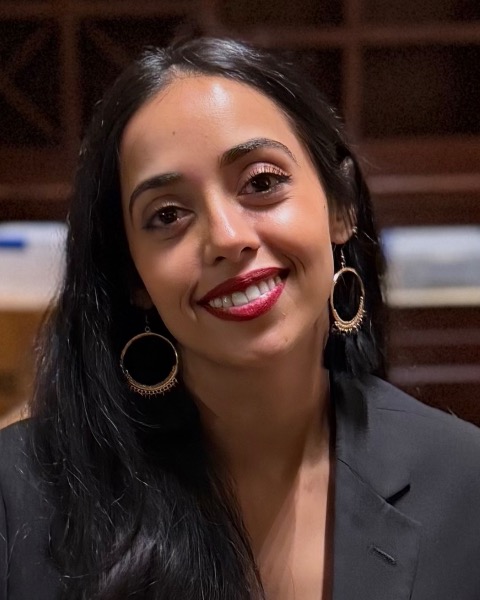
Kiran Kaur, M.S. (she/her/hers)
Predoctoral Intern
Massachusetts General Hospital/Harvard Medical School
Salt Lake City, UT, United States

Matthew Southward, Ph.D. (he/him/his)
Assistant Professor
The Ohio State University
Columbus, OH, United States
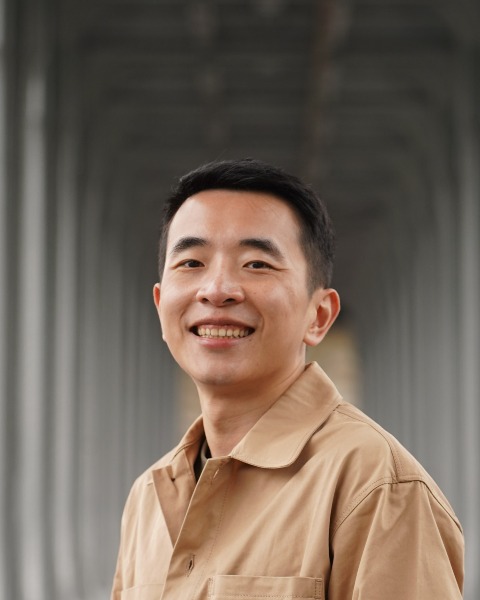
Mark Chen, Ph.D. (he/him/his)
Yale University
New Haven, CT, United States
Kiran Kaur, M.S. (she/her/hers)
Predoctoral Intern
Massachusetts General Hospital/Harvard Medical School
Salt Lake City, UT, United States
Maria Kalantzis, M.A. (she/her/hers)
Ph.D. Candidate
Bowling Green State University
Bowling Green, Ohio, United States, OH, United States
.jpg "Ramya Ramadurai, M.A. (she/her/hers) photo")
Ramya Ramadurai, M.A. (she/her/hers)
Graduate Student
Mclean Hospital/Harvard Medical School
Bethesda, MD, United States

Wisteria Deng, M.S., Other (she/her/hers)
Clinical Fellow
Yale University
New Haven, CT, United States
Emotion regulation (ER) is a core psychological process that helps individuals manage emotions in response to stress. However, for racial/ethnic and other marginalized communities, ER occurs within distinct sociocultural contexts shaped by discrimination, acculturative stress, and systemic inequities. In these populations, ER patterns may emerge not only due to individual differences but also as an adaptive response to chronic exposure to minority stress. Recent research highlights ER flexibility (i.e., the ability to modify regulatory strategies based on changing situational demands) as a critical yet understudied factor in understanding resilience and distress in minoritized populations. Understanding when, how, and for whom ER flexibility supports well-being is essential for refining theoretical models and developing culturally responsive interventions. This symposium presents a novel, interdisciplinary perspective on ER and ER flexibility in minoritized populations by integrating ecological momentary assessments (EMA), meta-analytic synthesis, and mixed-methods approaches with emerging theoretical models.
The first presentation develops and validates EMA measures of ER flexibility across community, clinical, and culturally diverse samples, highlighting cultural and diagnostic differences in flexibility patterns. The second presentation uses EMAs over two weeks to examine ER flexibility among ethnic minority college students, integrating two leading ER flexibility frameworks to assess how regulatory processes unfold in daily life. The third presentation uses meta-analytic techniques to synthesize findings from over 100 studies, revealing how different ER strategies (e.g., reappraisal, rumination) interact with minority stress across various study designs. The fourth presentation uses a community-based mixed-methods approach to explore ER among Black women, emphasizing how sociocultural beliefs about emotional control impact ER strategy selection and well-being. The final presentation introduces a novel cognitive perspective on ER flexibility, discussing how interpretation flexibility (i.e., the ability to update social perceptions) intersects with ER strategy variability in response to identity-based stress.
Findings have direct implications for intervention development, particularly in adapting cognitive-behavioral approaches to better align with the lived experiences of diverse communities. By integrating cutting-edge methodological approaches and novel conceptual perspectives, this symposium advances the field by bridging gaps between basic science, minority stress research, and clinical application. This work informs theoretical innovation and the development of evidence-based, context-sensitive interventions, contributing to a more nuanced understanding of ER and ER flexibility.
Presenters bring expertise from various disciplines and career stages to discuss ER flexibility research across different populations and methodological approaches. The discussant, drawing from extensive experience in ER research and intervention science, will synthesize these findings and provide insights into future directions for research and clinical applications.
Speaker: Mark Chen, Ph.D. (he/him/his) – Yale University
Speaker: Kiran Kaur, M.S. (she/her/hers) – Massachusetts General Hospital/Harvard Medical School
Co-author: Brian Baucom, Ph.D. (he/him/his) – University of Utah
Co-author: Monika Lohani, Ph.D. (she/her/hers) – University of Utah
Co-author: bert uchino, Ph.D. (he/him/his) – university of utah
Co-author: Feea Leifker, MPH, PhD (she/her/hers) – University of Utah
Co-author: Anu Asnaani, Ph.D. (she/her/hers) – University of Utah
Speaker: Maria A. Kalantzis, M.A. (she/her/hers) – Bowling Green State University
Co-author: Maria A. Kalantzis, M.A. (she/her/hers) – Bowling Green State University
Co-author: Lorelai Symmes, BS – Bowling Green State University
Speaker: Ramya Ramadurai, M.A. (she/her/hers) – Mclean Hospital/Harvard Medical School
Co-author: Greighson M. Rowe, M.A. – American University
Co-author: Nathaniel R. Herr, Ph.D. (he/him/his) – American University
Speaker: Wisteria Deng, M.S., Other (she/her/hers) – Yale University
Co-author: Sofie Glatt, B.A. – James J. Peters VA Medical Center
Co-author: Yutong Zhu, B.S. (she/her/hers) – Yale University
Co-author: Mark Chen, Ph.D. (he/him/his) – Yale University
Co-author: Tyrone Cannon, PhD (he/him/his) – Yale University
Co-author: Jutta Joormann, Ph.D. – Yale University