
.png)


LGBTQ+
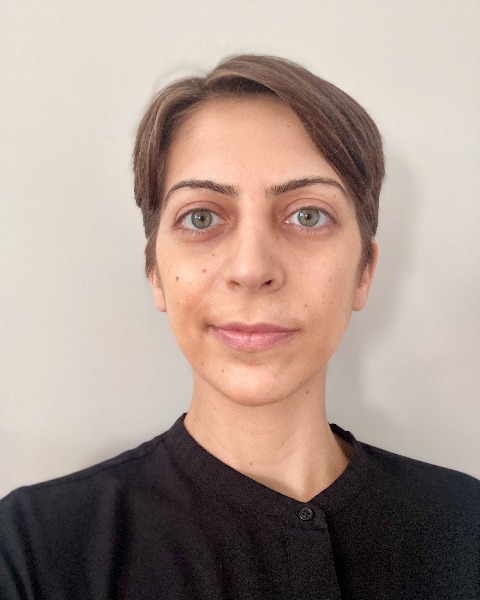
Briana Last, Ph.D. (they/them/theirs)
Assistant Professor
Stony Brook University
Stony Brook, NY, United States
Mark Hatzenbuehler, Ph.D.
Professor
Harvard University
Cambridge, MA, United States
Julian Burger, Ph.D. (he/him/his)
Postdoctoral Fellow
Yale University
New York City, NY, United States
Briana Last, Ph.D. (they/them/theirs)
Assistant Professor
Stony Brook University
Stony Brook, NY, United States
Hunter Baldwin, BA (they/them/theirs)
Postbac Researcher
Yale University
New Haven, Connecticut, United States
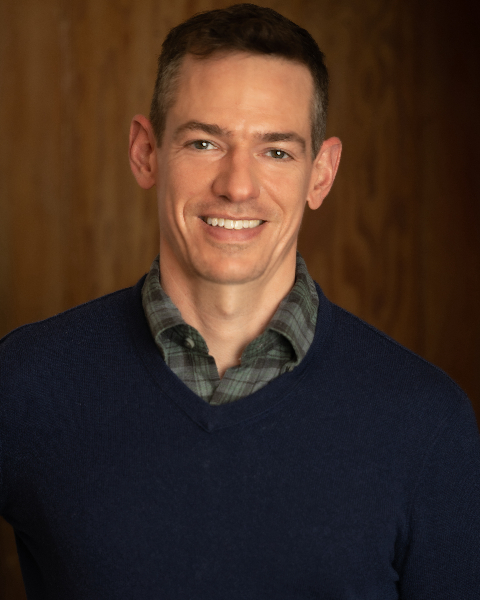
John Pachankis, Ph.D.
Susan Dwight Bliss Associate Professor of Public Health (Social and Behavioral Sciences)
Yale University
New Haven, CT, United States
Danielle Chiaramonte, Ph.D.
Associate Research Scientist
Yale School of Public Health
New York, NY, United States
As LGBTQ+ people face growing threats to their safety and well-being in the United States, there is an urgent need to rapidly implement affirmative evidence-based practices (EBPs) at scale. However, few EBPs exist to specifically support LGBTQ+ people’s well-being. One promising EBP that can address LGBTQ+ people’s ongoing minority stress experiences and mental health challenges is LGBTQ-affirmative cognitive-behavioral therapy (CBT), a transdiagnostic treatment designed by and for LGBTQ+ people that directs providers to develop case formulations that integrate minority stress theory with cognitive-behavioral principles. After being tested in 6 efficacy trials, LGBTQ-affirmative CBT is now being implemented in 90 LGBTQ+ community centers nationwide in a type 3 hybrid effectiveness-implementation trial. This symposium, which aligns with the convention’s theme to showcase research that promotes rigorous and inclusive affirmative therapies, highlights efforts along the translational pipeline—from efficacy to implementation research—to ensure that LGBTQ-affirmative CBT is supporting LGBTQ+ people’s mental health in the frontline community settings where many seek care.
First, we describe research using natural language processing, a type of artificial intelligence that processes text, to identify minority stress content in LGBTQ-affirmative CBT sessions. We find that in-session discussion of certain minority stress themes predicts treatment outcomes at follow-up.
Next, we leverage baseline data from the hybrid effectiveness-implementation trial to identify LGBTQ+ community center providers’ training in, perceptions of, and routine deployment of minority stress-informed case formulations in usual care. We find that most providers report being trained in case formulation and find developing case formulations with clients helpful, but perceive barriers to routine implementation of case formulation.
Third, we present data on LGBTQ+ community center providers’ perceptions and attitudes towards EBPs, examining multi-level predictors of these perceptions and attitudes. We find that organizational priorities as well as providers’ training and cultural backgrounds are associated with their openness to EBPs.
Fourth, we describe preliminary results from the hybrid effectiveness-implementation trial, finding that providers demonstrate improved knowledge, confidence in, and use of LGBTQ-affirmative CBT following various training strategies in this treatment.
Finally, we discuss LGBTQ+ community center providers’ adaptations of LGBTQ-affirmative CBT, which suggest that providers frequently integrate other treatments into their implementation of LGBTQ-affirmative CBT to personalize care for each client.
Our discussant is a distinguished scholar who has devoted his career to examining the social determinants of LGBTQ+ people’s mental health, focusing on the biopsychosocial mechanisms through which multi-level determinants (from policies to interpersonal factors to intraindividual factors) shape LGBTQ+ people’s mental health. Our symposium will identify future directions for evidence-based and inclusive clinical science research to support LGBTQ+ people’s well-being at scale.
Speaker: Julian Burger, Ph.D. (he/him/his) – Yale University
Co-author: John Pachankis, Ph.D. – Yale University
Speaker: Briana Last, Ph.D. (they/them/theirs) – Stony Brook University
Co-author: Julian Burger, Ph.D. (he/him/his) – Yale University
Co-author: Hunter Baldwin, BA (they/them/theirs) – Yale University
Co-author: Rafael Esteva Hache, B.A. – Stony Brook University
Co-author: Palomi Kurade, BA (they/them/theirs) – Yale University
Co-author: Danielle Chiaramonte, Ph.D. – Yale School of Public Health
Co-author: John Pachankis, Ph.D. – Yale University
Speaker: Hunter Baldwin, BA (they/them/theirs) – Yale University
Co-author: Lauren Wilkins, BA – Postgraduate Associate
Co-author: Danielle Chiaramonte, Ph.D. – Yale School of Public Health
Co-author: Dennis Li, Ph.D. (he/him/his) – Northwestern University
Co-author: Brian Mustanski, Ph.D. – Northwestern University
Co-author: John Pachankis, Ph.D. – Yale University
Speaker: John Pachankis, Ph.D. – Yale University
Co-author: Danielle Chiaramonte, Ph.D. – Yale School of Public Health
Co-author: Hunter Baldwin, BA (they/them/theirs) – Yale University
Co-author: Lauren Wilkins, BA – Postgraduate Associate
Co-author: Xin Zhou, PhD – Yale School of Public Health
Co-author: Skyler D. Jackson, Ph.D. – Yale School of Public Health
Co-author: Audrey Harkness, PhD (she/her/hers) – University of Miami
Co-author: Zachary A. Soulliard, Ph.D. (he/him/his) – Miami University
Co-author: Em Matsuno, Ph.D. – Arizona State University
Co-author: Dennis Li, Ph.D. (he/him/his) – Northwestern University
Co-author: Brian Mustanski, Ph.D. – Northwestern University
Speaker: Danielle Chiaramonte, Ph.D. – Yale School of Public Health
Co-author: Hunter Baldwin, BA (they/them/theirs) – Yale University
Co-author: Ashley Hagaman, Ph.D. (she/her/hers) – Yale School of Public Health
Co-author: John Pachankis, Ph.D. – Yale University