
.png)



Technology/Digital Health

Olivia Metcalf, Ph.D. (she/her/hers)
The University of Melbourne
Carlton, Victoria, Australia
Brandi Fink, Ph.D. (she/her/hers)
Associate Professor
University of Oklahoma Health Sciences Center
Oklahoma City, OK, United States
Catharine Fairbairn, Ph.D. (she/her/hers)
University of Illinois at Urbana-Champaign
Champaign, IL, United States
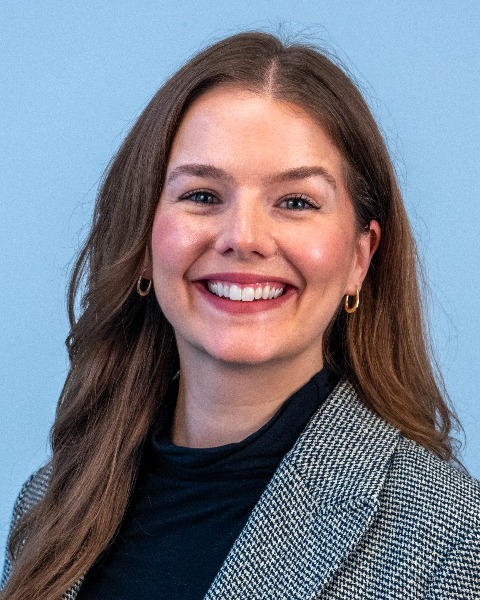
Lauren Henry, Ph.D. (she/her/hers)
Postdoctoral Fellow
National Institute of Mental Health
Bethesda, MD, United States
Olivia Metcalf, Ph.D. (she/her/hers)
The University of Melbourne
Carlton, Victoria, Australia

Julianne Flanagan, Ph.D. (she/her/hers)
Associate Professor
Medical University of South Carolina
CHARLESTON, SC, United States
Novel digital mental health solutions have tremendous potential to enhance the reach and impact of cognitive behavioral therapies. This symposium describes the findings from four highly novel studies that have leveraged wearable, smartphone, and other biosensor technology with the ultimate goal of improving the delivery and access to evidence-based interventions, including to underserved populations in which mental health treatment seeking is sometimes associated with stigma. Two presentations will focus on studies developing machine learning algorithms to detect behaviours in real-world settings in order to inform the development of early intervention and just-in-time interventions. The remaining two presentations focus on results from novel digital mental health interventions, that deliver just-in-time support to reduce the negative impacts of anger and aggression in diverse populations. Quantitative, qualitative, and machine learning analysis methods are utilised across the studies to ensure a rigorous scientific approach. Underserved populations include young infants, diverse couples experiencing intimate partner violence and alcohol use disorder, and women experiencing challenges with anger and aggression. Across all studies, feasibility, acceptability and co-design principles are leveraged to ensure that novel digital technologies are being informed by the needs of the users.
The first presentation reports on the accuracy and acceptability of transdermal sensors to detect real-time drinking, including high-risk drinking episodes. The second presentation reports on the potential for technology to reliably audio-record infant cries and predict infant psychopathology a year later. The third describes a new just-in-time-adaptive intervention designed alongside stakeholders and presents preliminary findings from a novel adaptive trial to ensure the CBT components target the underlying mechanisms. The fourth describes results from a study examining heart rate variability as a potential correlate of alcohol-related intimate partner aggression in naturalistic settings, and the preliminary feasibility and acceptability of an app-based heart rate variability biofeedback intervention.
Presenters, including international researchers, bring their experiences conducting research in particularly vulnerable and commonly underrepresented populations in mental health research, including infants, women who have experienced complex trauma, people experiencing addiction, and couples experiencing partner violence. The discussant will draw on her experience in developing novel interventions to tackle alcohol use disorder, violence, and aggression.
Speaker: Catharine E. Fairbairn, Ph.D. (she/her/hers) – University of Illinois at Urbana-Champaign
Co-author: Silvia Murgia, Ph.D. (she/her/hers) – University of Illinois at Urbana-Champaign
Co-author: Jiaxu Han, M.A. (she/her/hers) – University of Illinois at Urbana-Champaign
Co-author: Eddie Caumiant, M.S. (he/him/his) – University of Illinois at Urbana-Champaign
Co-author: Nigel Bosch, Ph.D. (he/him/his) – University of Illinois at Urbana-Champaign
Speaker: Lauren M. Henry, Ph.D. (she/her/hers) – National Institute of Mental Health
Co-author: Kyunghun Lee, Ph.D. – National Institute of Mental Health
Co-author: Elizabeth Tandilashvili, BS – National Institute of Mental Health
Co-author: Ellie Hansen, BA – National Institute of Mental Health
Co-author: Francisco Pereira, PhD – National Institute of Mental Health
Co-author: Daniel S. Pine, M.D. – National Institute of Mental Health
Co-author: Elizabeth Norton, D. Phil. – Northwestern University
Co-author: Lauren Wakschlag, PhD – Northwestern University
Co-author: Melissa Brotman, PhD – Emotion and Development Branch, NIMH
Speaker: Olivia Metcalf, Ph.D. (she/her/hers) – The University of Melbourne
Co-author: David Forbes, PhD (he/him/his) – University of Melbourne
Co-author: Tianchen Qian, PhD (he/him/his) – University of California Irvine
Speaker: Julianne C. Flanagan, Ph.D. (she/her/hers) – Medical University of South Carolina
Co-author: Paul Nietert, PhD – Medical University of South Carolina, Ralph H. Johnson VA Medical Center
Co-author: Brandi C. Fink, Ph.D. (she/her/hers) – University of Oklahoma Health Sciences Center
Co-author: Rachel Tomko, Ph.D. (she/her/hers) – Medical University of South Carolina
Co-author: James Cavanagh, Ph.D. (he/him/his) – University of New Mexico
Co-author: Morgan Thomas, B.A. (she/her/hers) – Medical University of South Carolina