
.png)


Child /Adolescent - ADHD

Elizabeth Capps, Ph.D. (she/her/hers)
Assistant Professor
Case Western Reserve University
Falls Church, Virginia, United States

Steven Evans, Ph.D.
Distinguished Professor
Ohio University
Athens, OH, United States
Elizabeth Capps, Ph.D. (she/her/hers)
Assistant Professor
Case Western Reserve University
Falls Church, Virginia, United States

Andrea Chronis-Tuscano, Ph.D. (she/her/hers)
Joel & Kim Feller Professor
University of Maryland
College Park, MD, United States
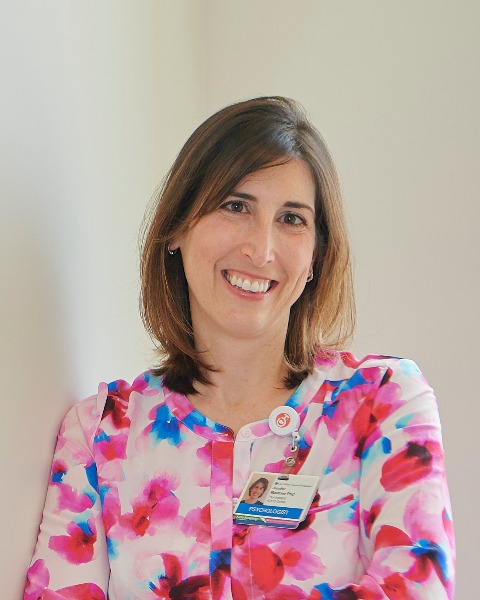
Jennifer Mautone, ABPP, Ph.D. (she/her/hers)
Assistant Professor
University of Pennsylvania Perelman School of Medicine
Philadelphia, PA, United States
Shauntal Van Dreel, MSW (they/them/theirs)
Ph.D. Student
Washington University in St. Louis
St. Louis, MO, United States
Decades of research on intervention to improve outcomes for youth with ADHD have illuminated several psychosocial interventions that effectively reduce symptoms and impairment experienced by these youth and their families (i.e., behavioral parent training for children and organizational skills training for adolescents) (Evans et al., 2018). Despite the presence of effective interventions, many barriers exist to effectively engage, or participate in treatment after initial enrollment (e.g., Chacko et al., 2016; Sibley et al., 2023). These barriers are particularly pronounced among youth and families who face significant adversity (Chronis et al., 2004; Sibley et al., 2022), such as youth and families from marginalized groups.
Addressing engagement in intervention is a critical task for supporting positive outcomes for youth with ADHD and their families. As a result, researchers have focused on novel approaches to effectively engage youth with ADHD and their families in intervention that address barriers to engagement across development. These strategies include treating parents’ psychopathology prior to youth intervention (Chronis-Tuscano, et al.), utilizing a digital augmentation within school-based organization skills training (Capps, et al.), using peer delivery and involving parents in high school-based intervention (Van Dreel et al.), and providing intervention within primary care using community health partners to engage families (Mautone et al.). Across presentations in this symposium, presenters identify how strategies were designed to address barriers to engagement, particularly among diverse youth and families. Presenters will also describe results from clinical trials of each of these strategies and next steps in these lines of research. As presentations in this symposium span development and target various barriers to engagement in intervention for individuals with ADHD, the discussant will synthesize themes across presentations and highlight important implications for engaging diverse youth with ADHD and their families in intervention.
The presentations in this symposium are best presented together given the need to consider the complex contributors to treatment engagement across development for youth with ADHD. ADHD is a neurodevelopmental disorder that individuals experience their entire lives. As such, the symposium presents efforts to enhance treatment engagement across development. Further, because youth and families may experience a variety of barriers to engagement (i.e., logistical, cognitive, behavioral), it is important to discuss a variety of scientific efforts to enhance treatment engagement in one presentation. In this way, both practitioners and researchers will be able to identify strategies to consider and comprehensively address the variety of challenges to engagement youth with ADHD experience.
Speaker: Elizabeth Capps, Ph.D. (she/her/hers) – Case Western Reserve University
Co-author: Aren J. Tucker, B.A. – University of South Carolina
Co-author: AJ Matteis, M.P.S. – Children's National Hospital
Co-author: Charity Majusiak, M.P.S. – Children's National Hospital
Co-author: Qinxin Shi, Ph.D. – Texas Christian University
Co-author: Amanda Steinberg, B.S. – Virginia Polytechnic Institute and State University
Co-author: Melissa R. Dvorsky, Ph.D. (she/her/hers) – Children's National Hospital
Speaker: Andrea M. Chronis-Tuscano, Ph.D. (she/her/hers) – University of Maryland
Co-author: Nadia Bounoua, Ph.D. – University of Maryland- College Park
Co-author: Donna Marschall, PhD (she/her/hers) – Children's National Hospital
Co-author: Christina Danko, Ph.D. – University of Maryland- College Park
Co-author: Joyce Lui, Ph.D. (she/her/hers) – Concordia University
Co-author: Daria Taubin, B.A. – University of Maryland- College Park
Co-author: Adelaide Robb, MD (she/her/hers) – Children's National Hospital
Speaker: Jennifer A. Mautone, ABPP, Ph.D. (she/her/hers) – University of Pennsylvania Perelman School of Medicine
Co-author: Alex Holdaway, Ph.D. (he/him/his) – Children’s Hospital of Philadelphia
Co-author: Thomas J. Power, ABPP, Ph.D. (he/him/his) – Children’s Hospital of Philadelphia
Speaker: Shauntal Van Dreel, MSW (they/them/theirs) – Washington University in St. Louis
Co-author: Shauntal Van Dreel, MSW (they/them/theirs) – Washington University in St. Louis
Co-author: Margaret Sibley, Ph.D. (she/her/hers) – University of Washington School of Medicine
Co-author: Stefany Coxe, Ph.D. (she/her/hers) – Cedars-Sinai
Co-author: Ben Aaronson, Ph.D. (he/him/his) – University of Washington School of Medicine, Department of Pediatrics
Co-author: Alexa Matlack, Ph.D. – University of Washington, Seattle
Co-author: Mercedes Ortiz Rodriguez, MPH (she/her/hers) – Fred Hutch
Co-author: Joshua M. Langberg, Ph.D. – Rutgers University
Co-author: Aaron Lyon, Ph.D. (he/him/his) – University of Washington
Co-author: Taylor Rainwater, M.Ed. (he/him/his) – Seattle Public Schools
Co-author: Brooke Kircher, M.Ed. (she/her/hers) – Seattle Public Schools, Garfield High School