
.png)



Symposia
LGBTQ+
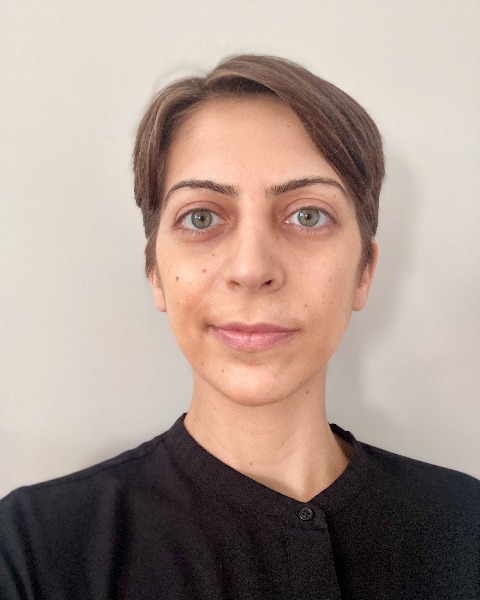
Briana Last, Ph.D. (they/them/theirs)
Assistant Professor
Stony Brook University
Stony Brook, NY, United States
Julian Burger, Ph.D. (he/him/his)
Postdoctoral Fellow
Yale University
New York City, NY, United States
Hunter Baldwin, BA (they/them/theirs)
Postbac Researcher
Yale University
New Haven, Connecticut, United States
Rafael Esteva Hache, B.A.
Clinical Psychology PhD Student
Stony Brook University
Lake Grove, NY, United States
Palomi Kurade, BA (they/them/theirs)
Postbac Researcher
Yale University
New Haven, CT, United States
Danielle Chiaramonte, Ph.D.
Associate Research Scientist
Yale School of Public Health
New York, NY, United States

John Pachankis, Ph.D.
Susan Dwight Bliss Associate Professor of Public Health (Social and Behavioral Sciences)
Yale University
New Haven, CT, United States
An evidence-based case formulation refers to a hypothesis about the specific antecedent and maintenance factors of each client’s mental health challenges. Ideally, providers synthesize empirical insights and an understanding of each client’s unique culture and social context to formulate their treatment approach. High-quality and contextually sensitive case formulations are associated with lower treatment dropout and improved clinical outcomes. However, despite case formulation being a core tenet of nearly all evidence-based practices, the extent to which frontline mental health providers have been trained in, routinely deploy, and incorporate clients’ social experiences in their case formulations is unclear.
The present study leverages baseline data from a hybrid effectiveness-implementation trial of LGBTQ+-affirmative cognitive behavioral therapy conducted in partnership with 90 LGBTQ+ community centers across the U.S. to examine providers’ case formulation training and practices with their LGBTQ+ clients. We describe providers’ self-reported case formulation experiences and practices and then assess providers’ actual case formulation skills and their integration of LGBTQ+ clients’ LGBTQ+-related stress experiences using a validated simulated practice exercise (analyses complete in July 2025).
Of 637 providers, 386 (60.5%) reported being trained in case formulation and 424 (66.6%) reported finding using case formulation helpful in their clinical work either “quite a bit” or a “great deal.” However, of those who had been trained, fewer providers (214, 37.0%) reported collaboratively developing a case formulation with their clients often or always and only 132 (36.8%) reported discussing case formulation in most or all of their supervision meetings. On the other hand, providers reported that their supervisors are generally knowledgeable about, supportive of, and value case formulation (M = 3.58 out of 5, with 1 = not at all, 5 = to a very great extent).
These data suggest that many providers at LGBTQ+ community centers have been trained in case formulation and perceive developing case formulations to be helpful, but face barriers to routinely implementing case formulation in practice. Findings reveal the need to explore multi-level implementation determinants of case formulation at these centers. Additional analyses, to be completed in July 2025, will identify these determinants and link them to providers’ real-world, baseline use of LGBTQ+-related stress-informed case formulations in routine practice.